
The Holy Trinity of Gain Staging: Overdrive, Distortion & Fuzz Pedals Explained
Hey RFGE Readers!
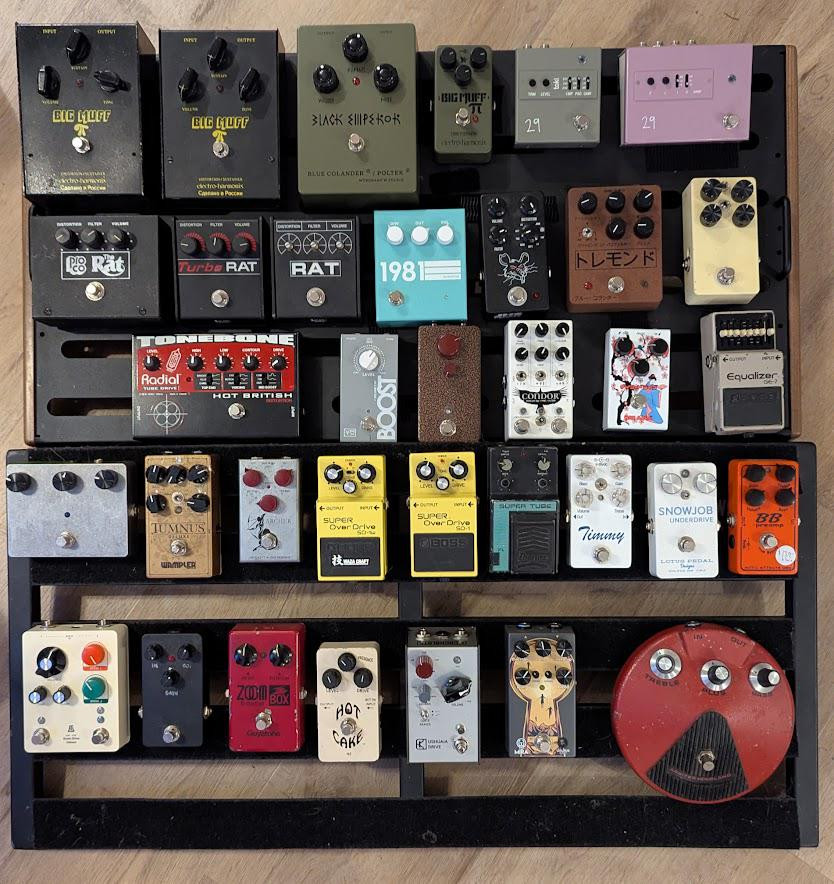
It’s been a busy summer for us here at the shop and one of the things we’d like to try and refocus on as we approach September is our blog, where we’ve covered many different subjects such as certain brand of guitar or what woods guitars are made from. In one previous blog we discussed the different categories of pedals guitar players use, which are: tone shaping, gain staging, and modulation pedals and today, we’re going to take a deeper dive into one of those categories, which is perhaps the most rock ‘n’ roll oriented category – gain staging. The three main types of gain staging are: overdrive, distortion, and fuzz. Each offers a unique flavor of grit, punch, and saturation that can transform a clean guitar signal into something rich, aggressive, or downright filthy. These types also represent eras of sound, and each has carved its own legacy in rock history. Whether you're dialing in a bluesy breakup or launching a sonic assault, understanding the differences (and similarities) between these pedals can revolutionize your tone. So here we go!
First up, we have overdrive, which is what some say is the sound of a tube amp pushed to Its sweet spot. These pedals emulate the natural breakup of a tube amplifier cranked to the edge. They’re dynamic and responsive to picking attack and guitar volume, providing a warm and touch-sensitive grit. Perfect for blues, classic rock, and anything needing a "pushed" sound without full-blown saturation. Here are some iconic Overdrive Pedals:
- Ibanez Tube Screamer (TS-808, TS9)
- One of the most beloved overdrives ever. Known for its midrange hump that helps guitars cut through the mix.
- Used by: Stevie Ray Vaughan, John Mayer
- Song Example: “Texas Flood” – Stevie Ray Vaughan
- Boss OD-1 / SD-1 Super Overdrive
- Boss’s early contribution to the overdrive category. A bit more aggressive than the Tube Screamer.
- Used by: Eddie Van Halen (OD-1)
- Song Example: “Eruption” – Van Halen (boosted Marshall amp with an OD-1)
- Fulltone OCD (Obsessive Compulsive Drive)
- A more modern take that blurs the line between overdrive and distortion, known for its transparency and wide gain range.
- Used by: Tom Morello, Rich Robinson
- Song Example: “Like a Stone” – Audioslave (Morello has used OCD for added edge)
In context, overdrive is often used as a boost—especially into already-cranked amps—to create more saturation and sustain. The Tube Screamer into a Marshall is a time-tested combo, popularized in the '80s and still going strong today.
Next up, we have distortion, which could be considered the hard rock and metal workhorse. These pedals offer more gain and compression than overdrives. They’re less reactive to touch dynamics and provide a consistent, powerful tone perfect for hard rock, grunge, and metal. While overdrives nudge your tone, distortion pedals slam it head-on. Here are some iconic distortion pedals:
- Boss DS-1 Distortion
- Perhaps the most recognizable orange pedal of all time. Sharp and cutting, it’s been on pedalboards since 1978.
- Used by: Kurt Cobain, Joe Satriani
- Song Example: “Smells Like Teen Spirit” – Nirvana
- ProCo RAT
- Darker and more aggressive than a DS-1, with a unique filter control and mid-heavy punch.
- Used by: James Hetfield, Nels Cline
- Song Example: “Master of Puppets” (early demos) – Metallica (RAT + Marshall in early days)
- MXR Distortion+
- A simple two-knob circuit, famously used in the '70s and '80s. More gritty than smooth.
- Used by: Randy Rhoads
- Song Example: “Crazy Train” – Ozzy Osbourne
In context, distortion pedals tend to replace the amp’s gain rather than augment it. Many are used with clean amp channels for a high-gain tone without needing to dime a tube amp. They're the backbone of modern rock and alternative.
Lastly, we have fuzz - the wild and unpredictable beast of them all! Fuzz pedals were the first real gain pedals, dating back to the early 1960s. They create extreme clipping and a square-wave-like signal that sounds broken—in the best way. Fuzz is raw, buzzy, and often uncontrollable, which is exactly why it’s loved. Here are some iconic Fuzz Pedals:
- Electro-Harmonix Big Muff Pi
- Huge sustain and thick, creamy fuzz. Used in psychedelic rock, grunge, and stoner metal.
- Used by: David Gilmour, Billy Corgan
- Song Example: “Today” – The Smashing Pumpkins
- Dallas Arbiter Fuzz Face
- One of the earliest fuzz circuits, known for its round enclosure and germanium/silicon variants.
- Used by: Jimi Hendrix
- Song Example: “Purple Haze” – Jimi Hendrix Experience
- ZVEX Fuzz Factory
- A modern, highly tweakable fuzz with self-oscillating insanity.
- Used by: Matt Bellamy (Muse)
- Song Example: “Plug In Baby” – Muse
In context, fuzz is temperamental. It reacts dramatically to guitar volume knobs, temperature, and power supply. It’s best placed first in your chain and often works best with single-coil pickups and vintage-style amps. In the right hands, fuzz becomes a creative instrument rather than just an effect.
So there are your three types of gain staging pedals, some specific makes and models of each, and some actual examples of artists who used them in their respective songs. Now let’s layout some general information pertaining to all three types...
Interestingly, they aren’t exclusive. Many guitarists stack gain stages—for instance, running a fuzz into an overdrive, or an overdrive into a distortion pedal. Pedal order and amp settings massively influence how each pedal behaves. For example:
-
- Stevie Ray Vaughan often stacked a Tube Screamer into a Fender amp, pushing both for that iconic blues grit.
- Billy Corgan stacked multiple Big Muffs and EQ pedals to create the wall-of-sound guitar tones on “Siamese Dream”.
- Jimi Hendrix sometimes combined a Fuzz Face with a Uni-Vibe, creating swirling, gnarly textures.
If you’re unsure which type to start with:
-
- Try an overdrive if you want subtle breakup, dynamic response, and midrange boost.
- Go for distortion if you need aggressive, saturated rhythm tones for rock or metal.
- Choose fuzz if you're after vintage psych-rock weirdness or crushing stoner doom.
Better yet, try all three in your signal chain and experiment with different combinations. Many modern pedals even blend characteristics—like:
-
- the JHS Morning Glory (transparent OD),
- Wampler Tumnus (Klon-style OD), or
- EarthQuaker Devices Hoof (a Big Muff-inspired hybrid fuzz).
From the subtle saturation of an overdrive to the raw filth of fuzz, these three gain pedal categories represent not just tones—but eras, genres, and revolutions in guitar sound. They're the foundation of countless riffs and solos that shaped the music we love. Whether you're chasing Hendrix’s fury, Cobain’s angst, or Vaughan’s soul, it all starts with gain staging. We hope this helps you land on your next favorite rock guitar tone!
Thanks for reading!
Nick Lyons, GM @ RFGE
Explore Popular Articles
PRS Day -- Thursday June 11, 2026 from 3-7pm
Join us June 11, 2026 from 3-7pm for PRS Day 2026. This event will focus on anything and everything...

How to Care for Your Guitars in Adverse Weather Conditions
Hello RFGE Family! This winter has been a cold one with consistant sub-freezing temps and we've also...

Labor Day 2025 Sale
We have all sorts of deals for Labor Day 2025. Save up to 25% off on our Deals and Steals page! Sav...